

Brendan George Ko on photography, Polynesian voyaging canoes, and plant intelligence
The Toronto and Maui-based artist join us to talk about the spirit of a place

This is the newsletter of the Earth Action Index: a discovery platform for nature and climate solutions.
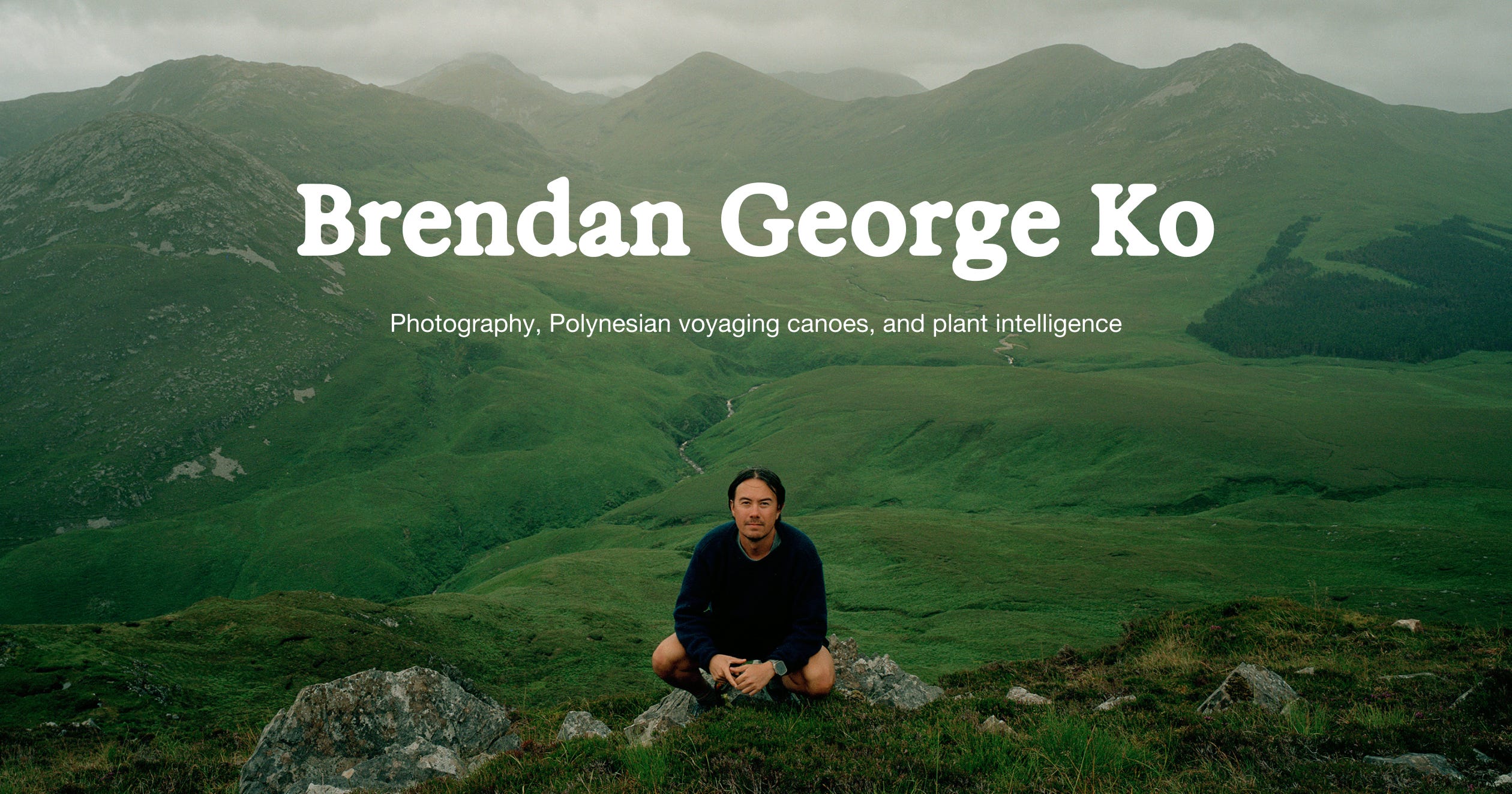
“You are in nature. You’re always in it. We are creatures of nature. For some reason, the human mind separated ourselves, thinking that we’re above it or that it’s a resource. But we are always part of it.”
Brendan George Ko has a singular way of photographing the living world. In his images, landscapes shine with subjectivity, imbued with stories and spirits. He is a visual artist based between Toronto and Maui whose work has been awarded and exhibited widely, with stories published in the New York Times, New Yorker, Vogue, Bloomberg and more. I’ve admired his work for years: in particular, his unique approach to capturing plants, which we explore in this conversation.
It was a joy to talk with him and ask about his practice and protocol to photograph the spirit of a place. The conversation ranges from his time working with the voyaging canoes of Hawaii to learning about the social life of forests from Dr. Suzanne Simard. We explore the idea of kuleana, responsibility to the places we love, and his latest project to document the world’s oldest trees. Best to take this one on a walk outside.
Listen to the conversation
Scroll down for highlights and timestamps from the interview.
Links
Read the transcript with images and links here.
Mentioned in the conversation:
The Haunted Landscape (2023-2025)
Moemoeā by Brendan George Ko
The Social Life of Forests (New York Times)
Saving the Butterfly Forest (The New Yorker)
Dr. Suzanne Simard’s new book When The Forest Breathes
Plant Intelligence collection on the Earth Action Index
Highlights
The first land that spoke to me (01:30-06:00)
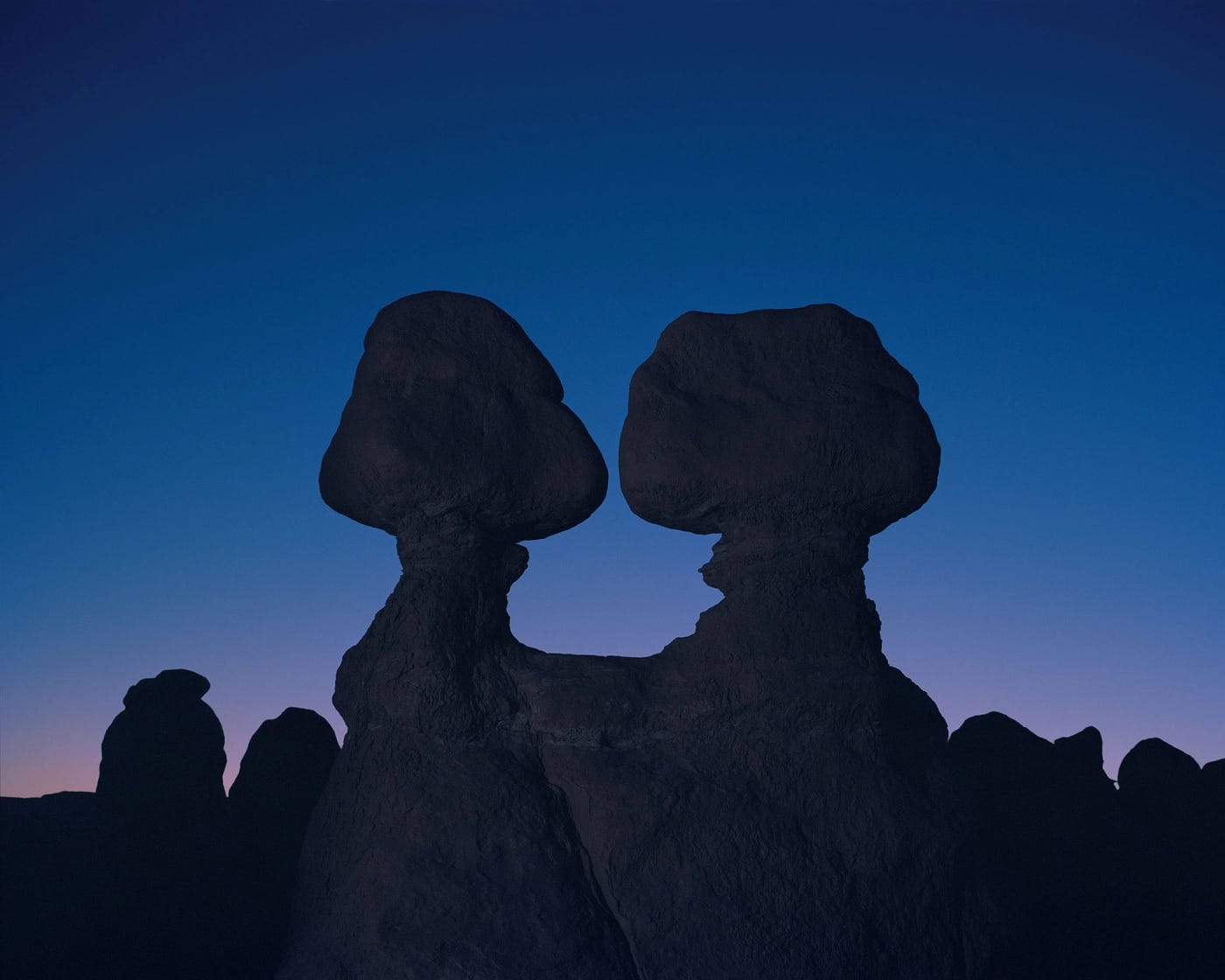
Revisiting the landscapes that shaped Brendan’s childhood - living in the Four Corners region (New Mexico, Arizona, Utah, and Colorado) and first encountering the spirits, stories, and indigenous history that define the place.
“I often tell people that that landscape was the first place, the first land that spoke to me. It gave me comfort in that feeling of being isolated and alienated. And it kind of became the basis of my spiritual connection to the landscape.”
How to photograph the spirit of a place (08:30-12:30)
We go deep on his recent project The Haunted Landscape - when he returned to the Four Corners after 23 years to rediscover the spirits of the landscape of his childhood. We talk about Brendan’s protocol for respectfully documenting landscapes and his take on building a practice of place where you live.
“As soon as I arrive, I do protocol. I ask the land: Hey, I come here with respect and good intentions. I hope to be respectful while I'm here. And part of the responsibility I feel is to convey how special this place is, how sacred this place is, and to be able to capture its spirits and give it to an audience to further understand that place and why it's so special.”
Protecting Hawaiian culture and making Moemoeā (19:50-31:00)
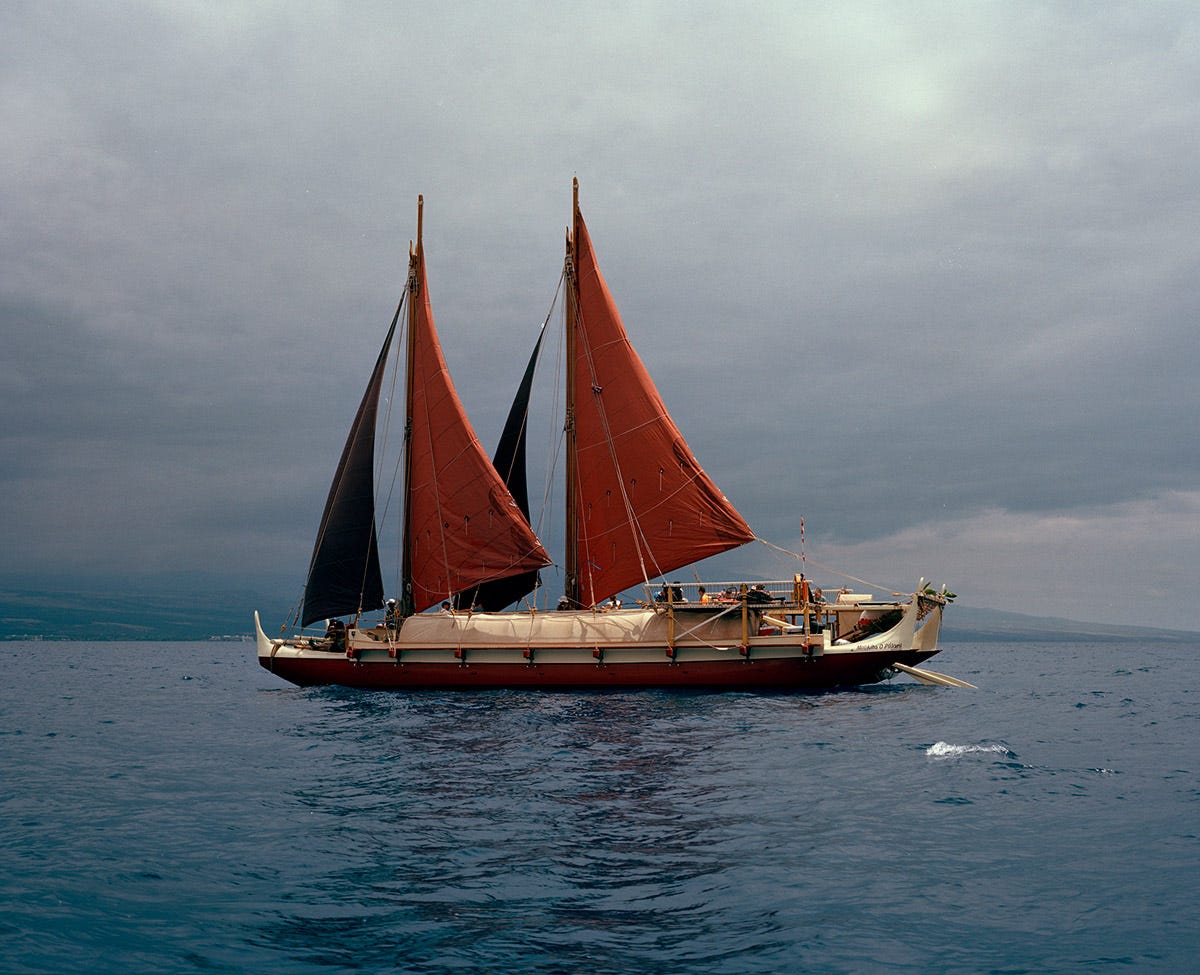
Recounting the origins of Brendan’s connection to Hawaii , learning the history of the Hawaiian Renaissance and building a sense of kuleana (“responsibility”) to the place.
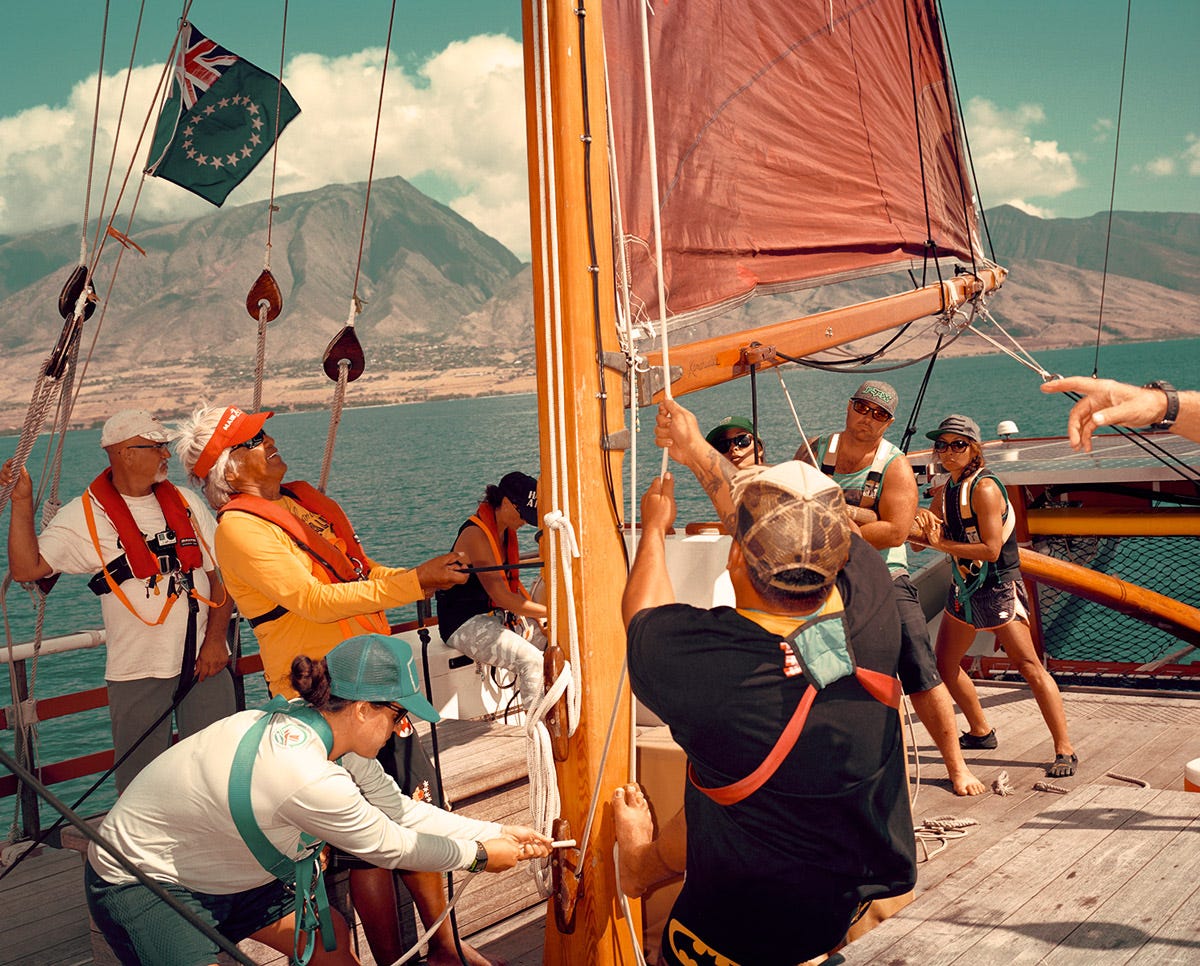
“The symbol of the Hawaiian Renaissance is a voyaging canoe named Hokule'a, which was born in 1975. I started doing work with the voyaging canoes in 2016, where I volunteered - I don't know how many hundreds of hours - and got to go serve as a crew member. I worked as the documentarian and as a general deckhand and educator and facilitator, driving people around…
It became like a thing where I just showed up. Doing the comparison between New Mexico and Hawaii - I started off as an outsider in both places, but by me showing up and showing my love all the time and respect for the culture, I was accepted into it. And that's why I will always call Maui home, because it's the only place that I've ever felt deeply connected to. And that was through kuleana - feeling responsible to that place."
Voyaging canoes and learning “the talk of the sea” (31:20-39:00)
Brendan shares stories from the voyaging canoes and the recent revival of indigenous Polynesian navigation. He introduces us to the work of the Polynesian Voyaging Society and legendary navigators like Papa Mau, preserving the practice of wayfinding by signals in the sea and stars.
“Hokule'a and PVS - Polynesian Voyaging Society - have this hybrid wayfinding. They still don't use instruments, but they make it work. And they took the voyaging canoe outside of its traditional realm, which is the Pacific Ocean. They went into the Atlantic Ocean. Hell, I even saw the voyaging canoe in the Great Lakes, which is a crazy thing. And so that wayfinding - so much of it was lost and so it was gained back.”
Plant personalities and the social life of forests (45:30-55:40)
On the obsession with native plants: portals to imagine what a landscape looked like before humans arrived. Learning about the intelligence of forests from his time documenting Dr. Suzanne Simard for the New York Times.
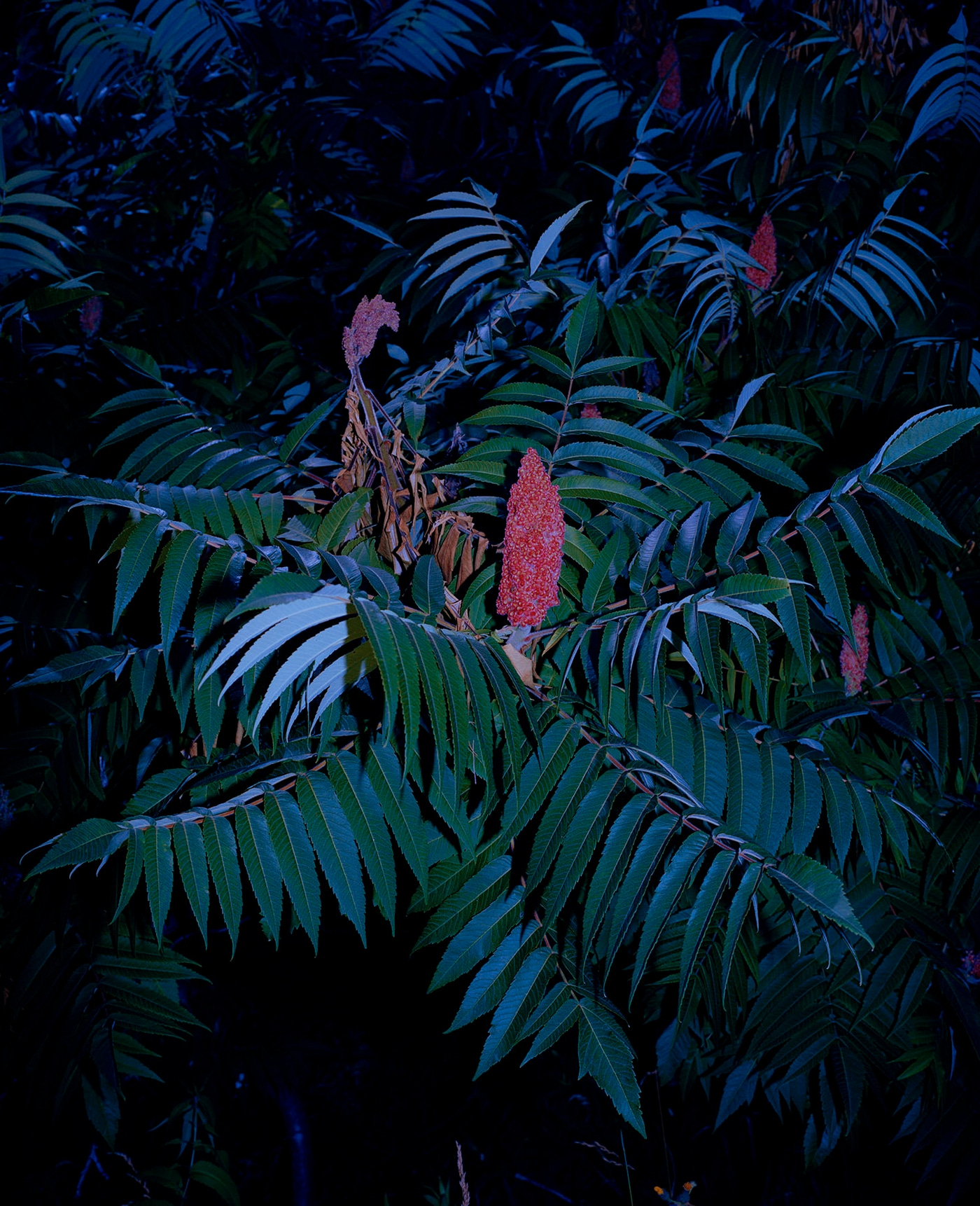
“I have such a fascination with endemic species of plants because they're like - for lack of a better term - freaks. Like they exist in one place. And that place made them so different, so queer, that you can't find them anywhere else… So that's where I'm obsessed with plants, because to me they're part of the landscape. They are like the figure that the landscape has formed. And that's why when I take photos, they're like portraits. I treat them like I would a human.”
On climate change and frameworks for action (1:00:20-1:11:00)
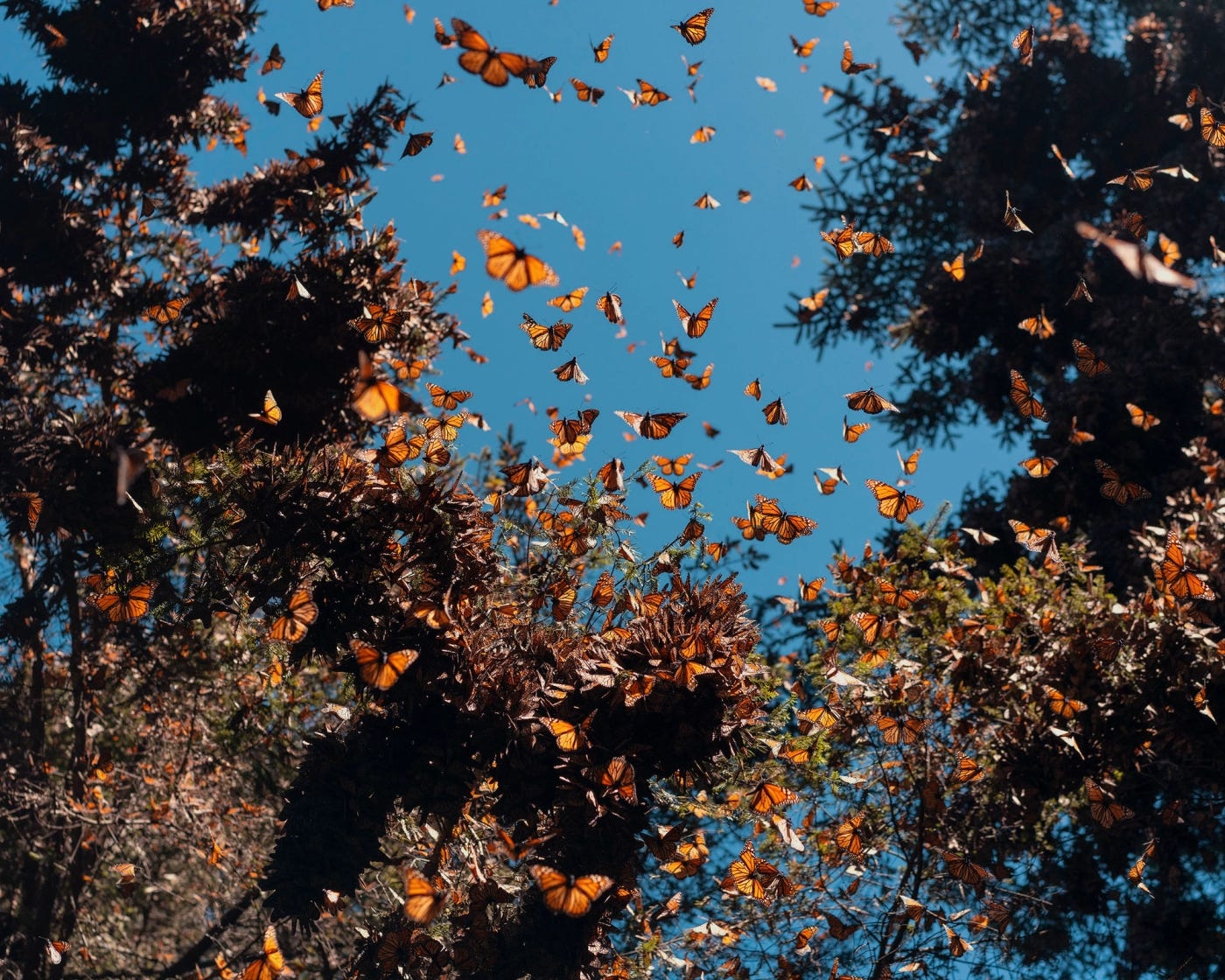
We talk about his ongoing project to photograph the world’s oldest trees while we still can: The Scale of Time According to Trees. We revisit a 2021 piece for The New Yorker when Brendan visited the Mexican highlands to document the restoration of a small critical forest where millions of monarch butterflies overwinter. I asked Brendan how he thinks about climate action and systems change.
“That perspective - me developing more of a discipline around the spiritual understanding of the world around me and how I'm a part of it - really helped inform me. When I was doing the voyaging canoe work, it was when Hokule'a was going around the world to share Hawaiian sustainability. The name of that voyage when it went around the world was Malama Honua, which is take care of the earth, take care of the environment around you.”
Preserving the sacred and kaona (1:10:00-1:15:00)
We close on the meaning of sacredness and protecting the places we love.
“Years ago, someone asked me, what does sacredness mean to you? And I told them, it's something that should not change. It's something that is so good that it should just be kept the way it is. Because there's something deeply special about it and it's ineffable… The only thing that could describe how special it is, is a poem - a lot of indigenous perspective are very poetic. It's not so direct. In Hawaiian culture, it's called kaona. It's a deep meaning of something that is in-between the lines… I want people to understand that these places are very special and should be kept as they are.”
Read the full transcript with images and links here.
You can keep up with Brendan’s work on Instagram and his website. He recently published his 2025 scrapbook, an annual tradition that weaves the year’s photography with poetry he writes.
Thanks for your attention. As always, you can explore the evolving Index as an early bird: