

Expedition to Banff and the future of fire and ice
Inside the 50th anniversary symposium at the Mountain Film and Book Festival

This is the newsletter of the Earth Action Index: a growing resource to participate in the climate and ecology movement. Today, a longform piece on wildfire and glaciers.
For the last fifty years, the Canadian Rockies have hosted a cultural festival unlike any other. A celebration of the mountains themselves: Earth-shaping, water-making, life-giving ecosystems. At the Banff Centre Mountain Film and Book Festival, mountains are arenas for adventure, keepers of culture, and bellwethers of our fate in a time of climate crisis.
The festival is firmly rooted in the foothills of the Rockies. But, like many of its guests, the event itself has become a globe-spanning traveler. Screenings in forty-five countries across all seven continents—including at McMurdo Station in Antarctica—amount to the largest film festival tour on Earth. Every year, its curators embark on a global expedition to share stories of other expeditions. Catch the film tour near you.
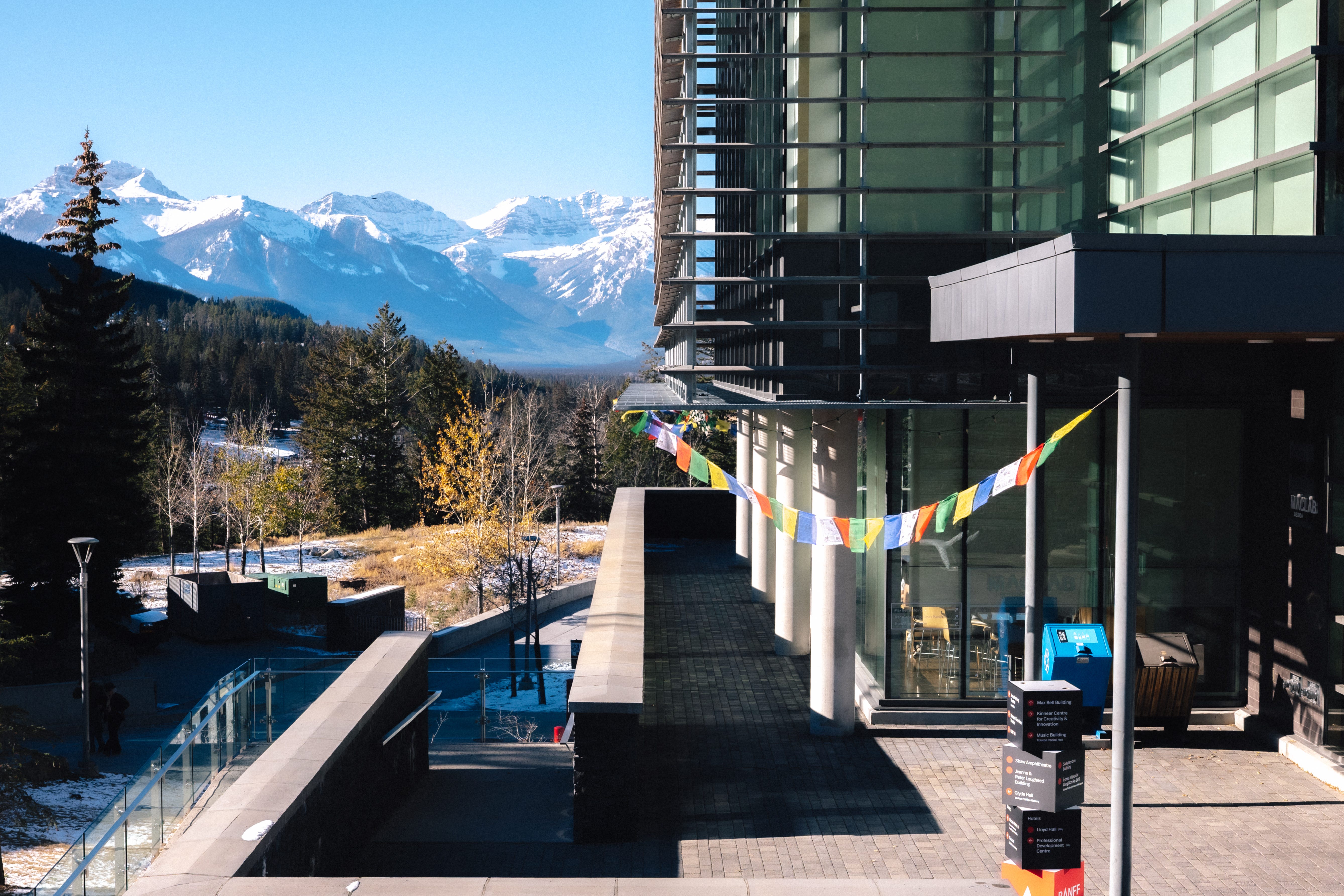
In past years, I watched the official selection on its stop in New York. With a press pass this year, I traveled straight to the source in Banff—for the golden anniversary of its flagship festival and a special Fire and Ice Symposium. Its central question: How can storytelling inspire action on worsening fires and vanishing glaciers?
Three icy days in Banff crystallized something for me: our relationships with fire and ice need to be reimagined. To face the urgent and proximate threat of fire, we need patient stewardship. To meet the gradual vanishing of glaciers, we are called to urgent care.
It’s 3:30 in the morning in Banff. The village is monochrome and mute. The November full moon is the largest and brightest of the year—a supermoon. Its pale light reveals a panorama of peaks. Everywhere you look: jagged crests of ancient limestone, cloaked in snow, reflect and shine like flood lights. It feels like a stadium, designed by glacial architects.
As it happens, tonight is the Beaver Moon. Fitting to be here in Banff, where beavers have Main Character Energy. The beaver is the national animal of Canada; the insignia of the Canadian Pacific Railroad; the ecosystem engineer that shapes rivers all over the country. I can’t escape it: on the bus to Canmore, a huge portrait of a beaver looms over my seat. On the trails, I stumble on their riverside lodges. In fact, when Walt Disney was asked to design Alberta’s version of Smokey Bear, he created Bertie Beaver to carry the message of fire prevention and suppression. More on that later.
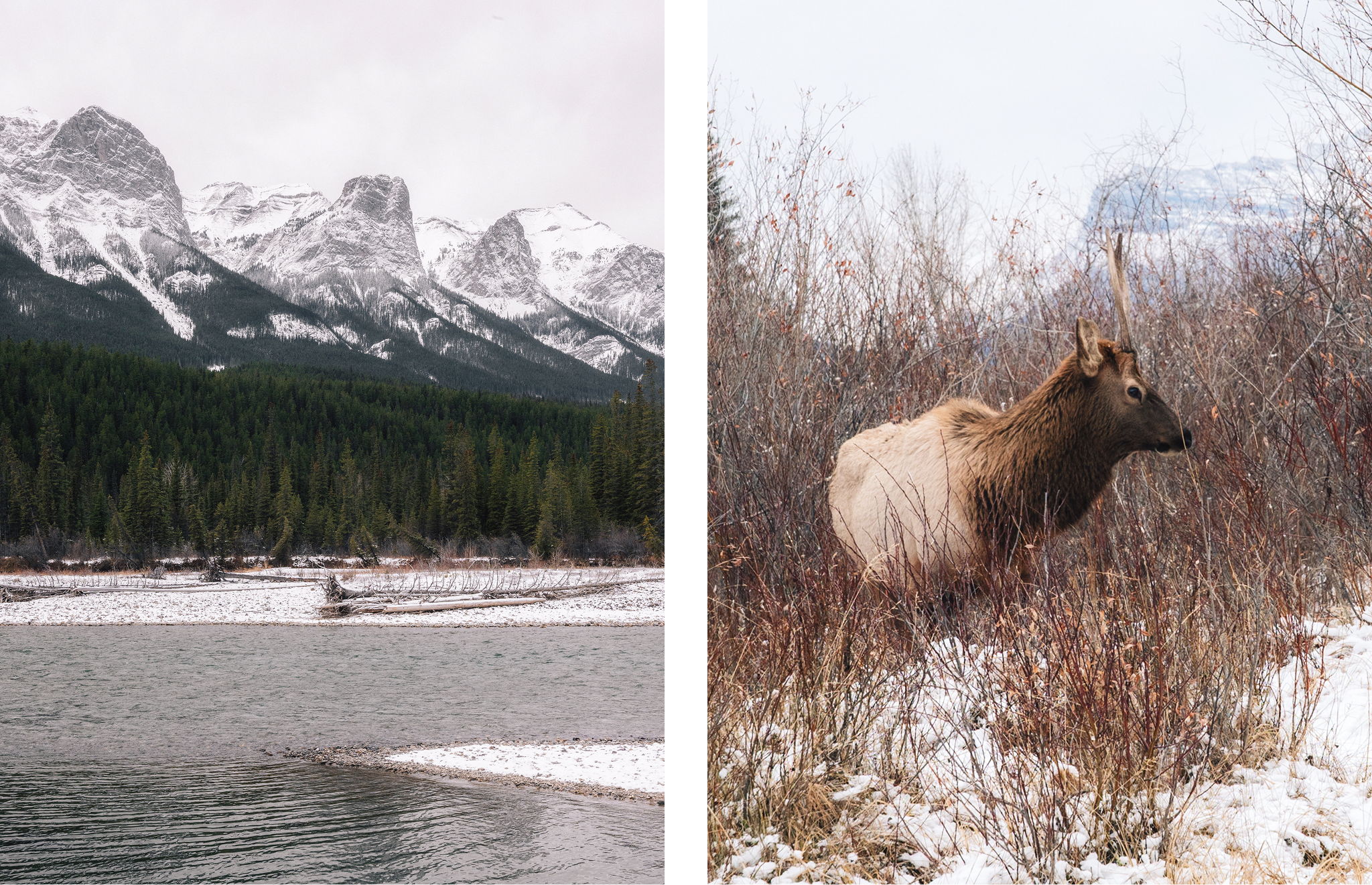
Beavers, elk, grizzly bears, and more roam this more-than-human neighborhood, of rushing rivers and subalpine forests. Black-and-white magpies flutter among the branches and red-capped woodpeckers tap at the trunks of larch trees. Within five minutes of hiking, I encountered two elk chewing on dogwood branches. They must know about its medicinal value. In town, every garbage bin is a locked bear box. One of the main pubs is named after local legend The Boss, the grizzly who is said to have fathered more than 70% of the bears in the national park.
This is the immediate habitat of the Banff Centre for Arts and Creativity: a contemporary academic campus with towering glass windows and swaying Tibetan prayer flags. Year-round, it’s a gathering place and residency for outdoor athletes, artists, adventurers, scientists, indigenous leaders, environmentalists and more.
The centre’s 50th anniversary festival was a balancing act. On one hand, guests were stoked to see “Radical Reels” of athletes doing 1440° stunts on mountain bikes and climbers scaling 9a routes. On the other, Banff hosted a sobering and solution-oriented conversation on the climate catastrophe. Here, the impacts of climate change are strongly felt. To the north, the city of Jasper suffered a destructive wildfire in summer 2024. Between the towns lies the Columbia Ice Field, a defining force of the Rockies that has seen rapid glacial melting in the last two decades. This is a place shaped by fire and ice, and these are the people working hardest to understand, adapt, and tell the world about it.
Reimagining our relationship with fire
Fire historians have a word for this era: the Pyrocene. An age shaped by extreme fire. Memories and images of burned communities and scorched landscapes are seared into our minds. Red suns and orange skies, go-bags and Watch Duty, fire insurance and adaptation, evacuation and rebuilding—this is the vernacular of the Pyrocene.
This is the personal reality for Sasha Galitzki, an aerial artist who lost her home to the Jasper fire in 2024. She is the subject of the short film Embers (dir. Trixie Pacis), an intimate portrait of her reckoning with wildfires and persistence in rebuilding her life and art. It’s a story of reclaimed agency. The scenes of Sasha’s aerial performances—hanging from scarlet-red fabrics among ice-blue glaciers and burned-black woodlands—will stick with me as symbols of resilience.
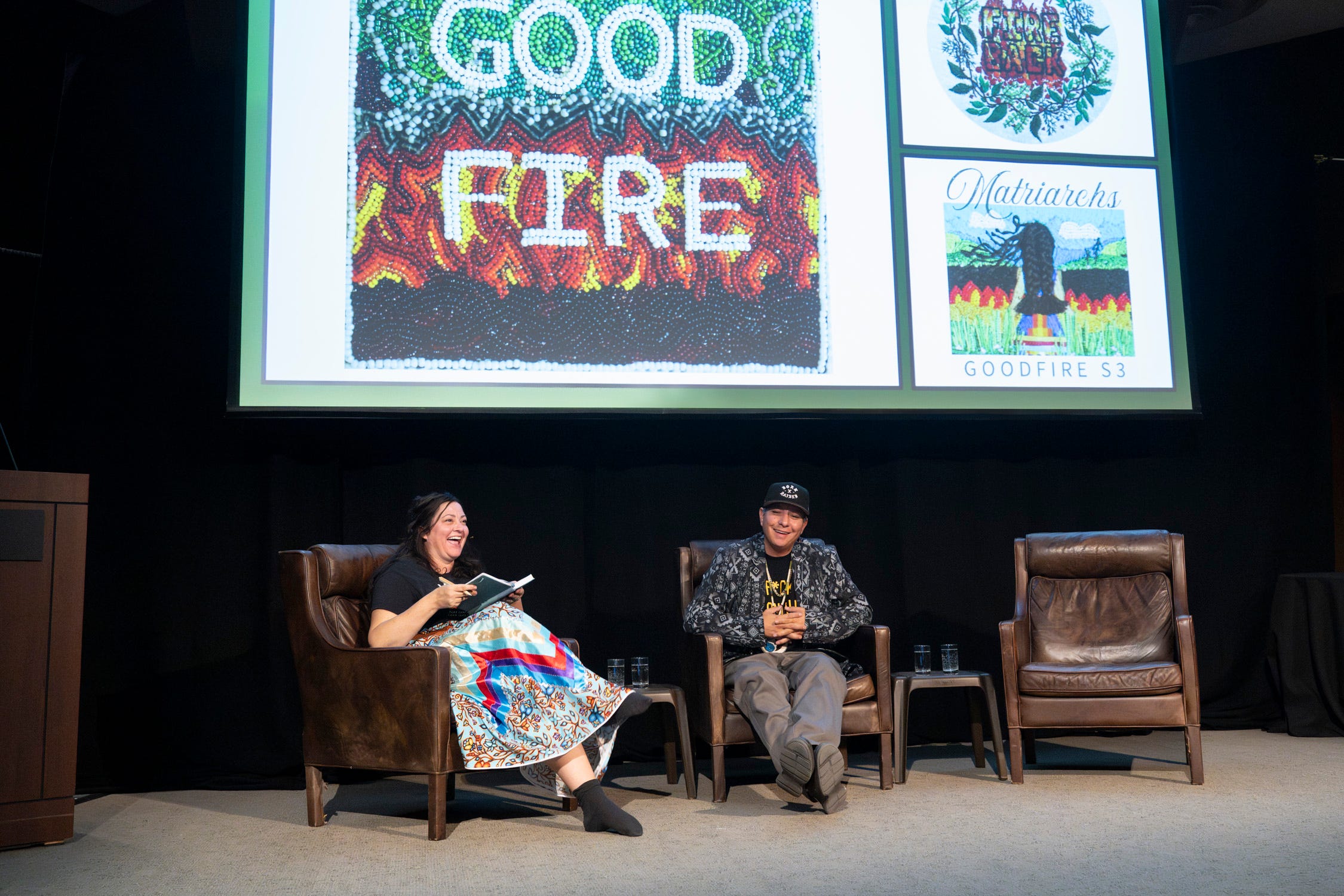
To this stark truth, speakers at the Symposium offered solutions and advocated for a reimagined relationship with fire. The headline host for the fire discussion was Dr. Amy Cardinal Christianson—whose warmth, wisdom, and infectious laughter lightened the day. She’s an indigenous fire specialist and host of the Good Fire podcast. Her mission, in essence: “Putting good fire on the landscape.”
For Christianson, the best thing we can do in the face of worsening wildfires is to work with fire as a tool for stewardship: carefully burning select tracts to support ecosystem health and prevent massive fires from mounting. This is the practice of “good fire,” “cultural burns,” or the more surgically-named “prescribed burns.”
For centuries, First Nations across what is now Canada have practiced cultural burning as a way to care for the land. Low-intensity fires—typically in the spring and fall—return nutrients to the soil, stimulate new plant growth, and clear the fuel that would otherwise feed catastrophic wildfires. This is a long-term, patient, and proactive kind of stewardship. Only recently has this practice started to earn its proper place in discussions of government fire policy.
Historically, the state’s relationship to fire was defined by antagonism, suppression, and prevention. This is the lineage of Smokey Bear and of Bertie Beaver: no fire, under any circumstances. But this dogmatic message has exacerbated the disastrous wildfires we see today, as fuel load builds up over time. As drought worsens, fire creates the conditions for more and more of itself.
Amanda Monthei, a former wildland firefighter, writer, and host of Life with Fire, offered a perspective to rebuild our sense of agency. Individuals can participate in fire resilience—like home hardening and building defensible space—and there are many indigenous fire stewardship initiatives to support. One invitation for action surprised me: joining prescribed burn gatherings in your community.
Monthei introduced me to “Prescribed Burn Associations,” or PBAs: groups of landowners and civilians that collaborate on healthy prescribed burns in their area. An experiential action, a literal gathering around fire. PBAs have popped up all over the US—over 130 associations in places as diverse as Kansas, Oregon, Arkansas, North Carolina, and California—with emerging equivalents in parts of Canada. Find if there’s a Prescribed Burn Association near you.
Awareness of the benefits of healthy fire and patient land stewardship is growing. But stigma remains deeply lodged in public and political imagination. The work of storytellers is to shape a balanced, reciprocal relationship to fire—and to rebuild our agency to adapt.
Learning to listen to the ice
“The glaciers speak so slowly and quietly that most among us have forgotten how to hear them.” These opening words from Robert Sandford—dubbed “the Winston Churchill of water”—helped frame the purpose of the symposium and of the 2025 UN International Year of Glaciers’ Preservation.
It’s essential that we learn to listen to the ice. Glaciers in ranges like the Alps, Andes, and the Himalayas together provide the drinking water for 2 billion people—22% of the world’s population. We’ve always relied on glaciers, nature’s most capacious “water towers,” for the freshwater that comes downstream. The Great Vanishing of glaciers is not only an urgent question of sea level rise, climate imbalance, or disappearing habitat; it reveals the delicate interdependence between people and ice.
While the ice only whispers, there is an community of glaciologists, explorers, artists, and more who have spent decades tuning into their expression. (Outside of Banff, a new short film, Crying Glacier, invites us to listen directly to the sounds of the melting Morteratsch). At the festival, I met a constellation of these messengers, who create films, exhibitions, VR experiences and more to give the glaciers a megaphone.
Dr. Andreas Linsbauer is a leading glaciologist in Switzerland. In his home country, one quarter of ice volume has been lost in the last 10 years. He articulated the rapid decrease of “mass balance,” and gave a banking analogy to explain the draining principal of glaciers. Expenses (ablation) are far outpacing earnings (accumulation). Greenhouse gas emissions are to blame. Linsbauer is a pioneering science communicator, having created VR and site-specific simulations that visualize possible futures for glaciers, depending on the climate path we take.
Scientists help us visualize and understand disappearing glaciers. It’s the work of storytellers to visceralize our relationship to the ice.
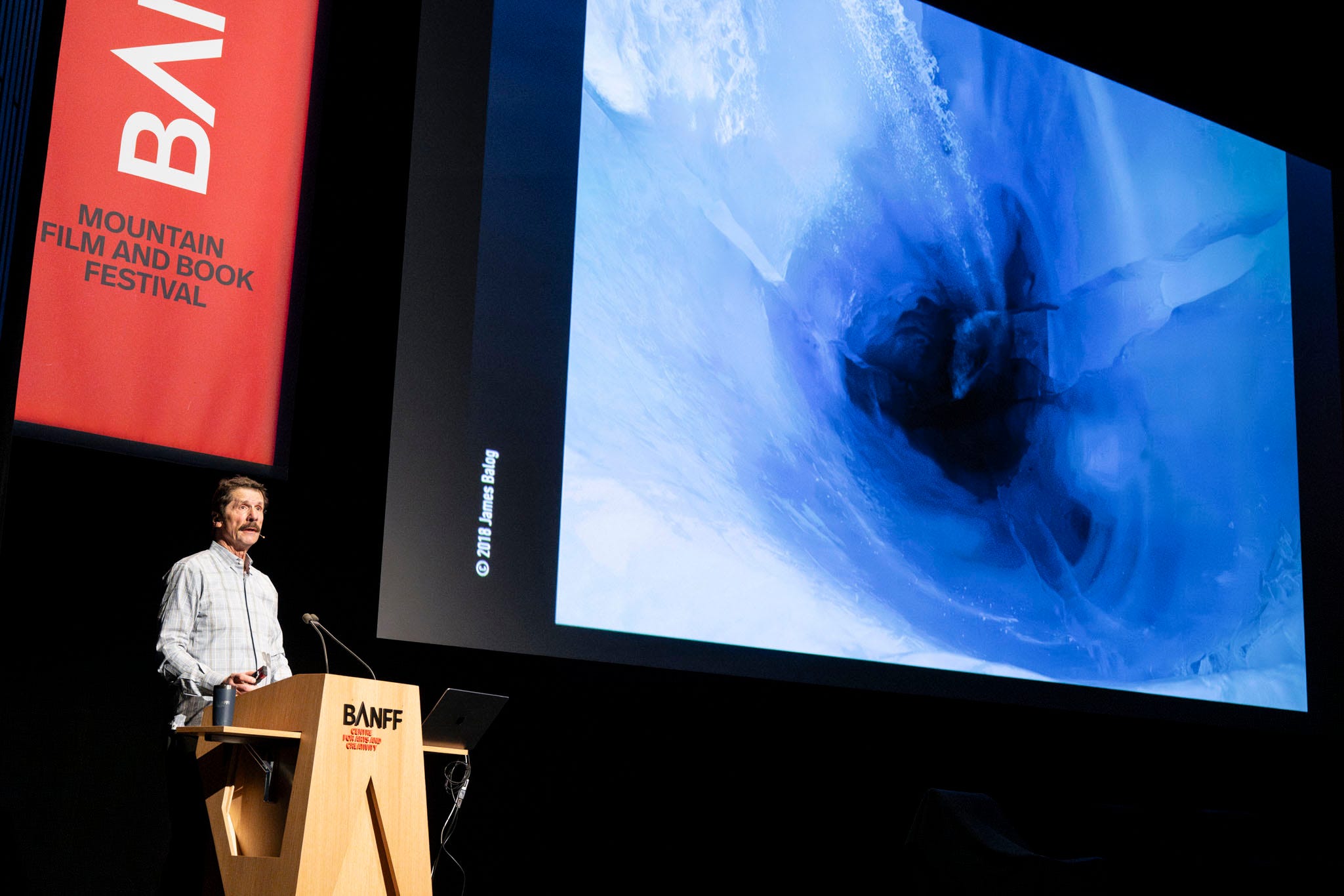
“The glaciers are alive,” says James Balog, incidentally echoing the title of Rob Macfarlane’s recent book about rivers. Balog is a photographer and explorer known for his iconic Extreme Ice Survey. Starting in 2006, he set up timelapse cameras at the world’s largest glaciers, shooting 1.5 million images over 15 years. His jaw-dropping dispatch of melting glaciers was first translated into the film Chasing Ice (2012), and at this year’s festival, he shared the follow-up Chasing Time (dir. Jeff Orlowski-Yang and Sarah Keo, 2024).
In the timelapse footage, the ancient disappears in an instant. Ice sheets release calves the size of entire cities. I lean forward in my seat. My hands prop up my head, holding a heavy awe.
You might imagine an artist with this longterm exposure to glaciers carries an intense amount of weight and grief. What emerges from Balog’s work is something even more powerful: an energized love and kinship with the ice. He listened so closely for 15 years that he emerged with the unabashed conviction of their aliveness. And at 73, he’s come to the conclusion: “We are part of nature’s life force, spirit, and soul.”
What is the functionality of these stories? What is the purpose of polar expeditions—like those of Børge Ousland, Vince Colliard, and Caroline Côté—pushing new limits and livestreaming to the world? It’s more than raising awareness. It’s an invitation to experience and absorb an intimate relationship with the ice.
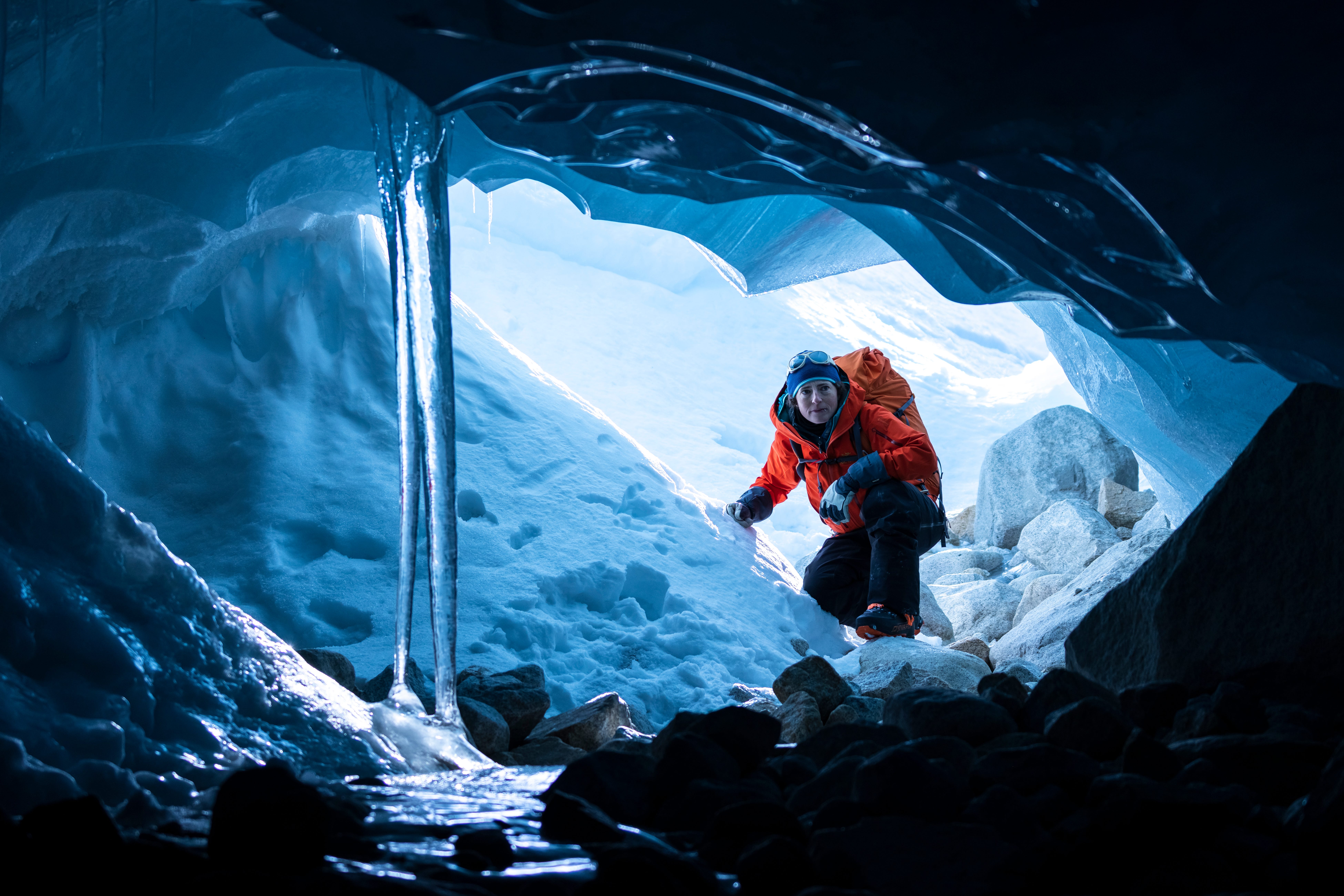
Still, I was grasping for solutions and grounded invitations for action. I walked up to Dr. Linsbauer and asked: How can we be solution-oriented when communicating about glaciers? There is no easier answer. We can only show what will be saved in the best-case climate scenario. The actions we need in the face of melting glaciers are the same diverse solutions to the wider climate crisis: from renewable energy and regenerative agriculture to public transit and circular economies and beyond. For glaciers, there is no specific corollary to prescribed burns. There is no moonshot intervention (despite expensive attempts at glacier blankets, or “geotextiles,” to slow melting).
The bridge from storytelling to action on glaciers is not a straight line. Glacier action is, at its core, about systemic change—an all-hands-on-deck effort to cut emissions and reshape the conditions that created this crisis. I left the Symposium with a few specific recommendations, like supporting efforts like Jim Elzinga’s Guardians of the Ice, attending an Indigenous-led glacier tour with Tim Patterson’s IceWalks, or donating to leadership-focused Girls* On Ice, led by Dr. Alison Criscitiello and Jocelyn Hirose in Canada.
Tuning into the reality of the glaciers—through secondhand stories or firsthand experiences—is an urgent invitation to feel our reciprocal connection with the ice. Our lives are tightly entwined. And listening is the foundation of any healthy relationship.
Cut back to 3:30 in the morning in Banff. I’m waiting for a Poparide carpool back to the airport in Calgary for my flight home. Standing alone in this valley, carved by glaciers in the last ice age, 20,000 years ago. My relationship to fire and ice took new shape after three days of exposure to these stories, ideas, and solutions.
Banff surprised, saddened, and supercharged me: to continue the work of amplifying solutions and fostering connection with the more-than-human world. I traveled here for a festival of films in categories like “adventure,” “climbing",” and “environment.” But by the end of my three days, I started to see them through a different lens: as love stories between people and planet.
Beautifully expressed