

Imagining better climate futures with Claire Elise Thompson
The Grist writer and editor joins us to talk about solutions journalism

🌀 Welcome back to the newsletter of Earthling: a tool to connect with local nature and participate in climate solutions. We released an app in July and have since welcomed Earthlings in 37 countries and 31 states. Download here.
Summer brings the climate crisis into the foreground: whether it reaches you through a plume of wildfire smoke, a bout of extreme heat, or a flash flood in your neighborhood. It is breaching the surface into our daily lives.
In moments like these, I seek out great “solutions journalism.” Everywhere from Grist to Atmos, there are life-affirming stories of people facing the crisis and implementing solutions. As Barry Lopez put it: those that “embrace fearlessly the burning world.”
From my seat, few reporters do this more effectively (and warmly) than Claire Elise Thompson, an associate editor at Grist, who writes the Looking Forward newsletter. Her weekly dispatches share visions of a clean, green, just future—combining deep reporting with an approachable levity rare among climate journalists. I do, in fact, look forward to the newsletter each week.
The most recent edition featured a story close to my heart: the active transformation of a former coal plant into a biodiverse public space in Norwalk, CT, right near my childhood home. Each mailing of Looking Forward also features a delightful “drabble”—a 100-word piece of fiction—that envisions a sustainable future.
I invited Claire to talk about her work and share some recommendations with the Earthling community. Check out an excerpt of our email interview below, find the full conversation on our platform, and subscribe to her newsletter here.
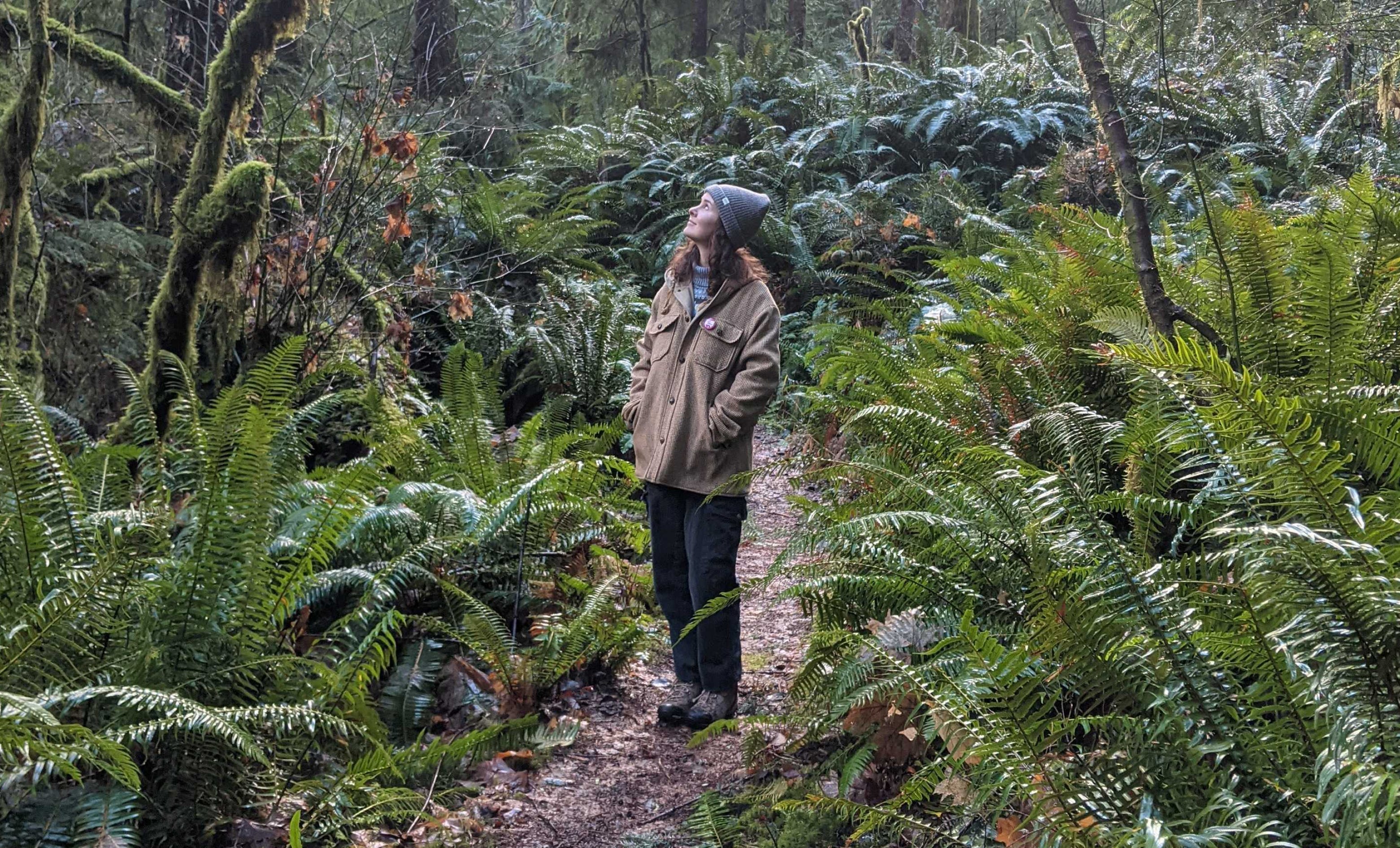
Michael Bass: To start, bring us into your origin story with Grist. You made a beeline there right after school — what drew you to the publication and what’s kept you there?
Claire Elise Thompson: Ha! Yes. I discovered Grist when I was in college, and I was immediately drawn to what I would describe as (at the time) a sassy tone that mixed climate and environmental news (things I cared about deeply) with pop culture references, sarcasm, gallows humor, and tons of puns. I think the first Grist story I read was something about coral bleaching, and the lede drew a comparison to Justin Bieber’s frosted tips. Mind you, this was about a decade ago. Back then, I think that approach was bringing something novel to the climate conversation, at a time when the environmental movement had sort of a serious, holier-than-thou reputation, and before the impacts of climate change had really become front and center in many people’s lives.
But Grist has matured quite a lot, along with the movement and along with the crisis itself. We do deep investigations — like my colleagues Naveena Sadasivam and Lylla Younes’ incredible work exposing the hazards of ethylene oxide. We do beautiful, human-centric storytelling, like Katie Myers’ recent stories on the way disasters like Hurricane Helene upend support systems for people in recovery for substance use.
I constantly have imposter syndrome because of how amazing my colleagues are. So, when I was 21, I guess I was keen to work at a small, scrappy newsroom that was doing climate news with irreverence — now, I am kind of amazed that I get to work at this top-notch publication that handles climate stories with the care and nuance that they deserve.
In Looking Forward, you write with a levity and a humanity that you don’t often see in climate journalism. Who are some of the writers that have most inspired your voice? What works of theirs would you point us to?
Wow, I love this question! I have to give my Grist forebears (and current colleagues) their flowers. Eve Andrews, who wrote the erstwhile Ask Umbra advice column, was a big inspiration to me long before I arrived at Grist. Ditto Kate Yoder, who has carved out a truly unique niche at the intersection of climate, culture, history, and language — check out her annual “Climate Words of the Year” feature, for example.
Beyond these four walls, I take inspiration from writers like Mary Annaïse Heglar — I remember, she wrote this piece for Vox in 2019 that has informed my thinking on the idea of personal climate responsibility ever since (“I work in the environmental movement. I don’t care if you recycle”). I also love the dynamic duo of Katharine K. Wilkinson and Ayana Elizabeth Johnson, who co-edited the All We Can Save anthology. Ayana’s recent book What If We Get It Right? was a prime example of “dang, I wish I would’ve written this.”
When I read a story about climate — and feel a surge of concern or curiosity — I want to channel that energy somewhere productive. Traditionally, it’s out-of-bounds for journalists to tell us what to do. What resources do you recommend when you’re asked the infamous question, “What can I do about it?”
I do hear this question from Looking Forward readers all the time. And I think it is so the right question! Honestly, I don’t think there are any wrong answers. The only wrong answer would be “nothing.” Indirectly, I’ve written about personal climate action in a number of ways, and how it can be a source of joy or an antidote to despair. I even wrote this sort of meta piece about the debate over personal responsibility, through the lens of dog ownership.
Some great resources for people who want to start figuring out their climate path, or taking the next steps on it: Climate scientist Kimberly Nicholas created this step-by-step guide, the “SHIFT” guide, in partnership with Project Drawdown, which walks readers through the levers they can pull as citizens, as professionals, as investors, as consumers, and as role models. I love that it starts with the civic stuff, because I think too many people view climate action as a lifestyle issue and not a political one.
I have also repeatedly recommended Ayana Elizabeth Johnson’s climate Venn diagram, which I think is a great little exercise to start thinking about how you can put your unique skills and interests to work for climate action. And, in a similar vein — Katharine K. Wilkinson has a brand new book out, Climate Wayfinding, which is built around this exact question.
Home is Seattle for you. Two questions: what are some landscapes and places you recommend exploring in the PNW, and who is a group (or two) doing great work to protect the places you love?
Yes, home is Seattle for now — though I’m originally from Virginia, and the Blue Ridge Mountains will always have my heart. Out here in the PNW, the landscape I love the most is the Olympic Peninsula — in particular, the charming town of Sequim, where my husband grew up. It’s famously in the “rain shadow” of the Olympic Mountains, and also sits right on the Strait of Juan de Fuca, with the Dungeness River running through it. It’s just gorgeous.
Several years ago, I got to write maybe my favorite piece ever, about the prairie restoration work that the tribe up there (the Jamestown S’Klallam Tribe) is doing. Fun fact: Prairies can store as much carbon as forests! And they mainly store it below ground, which is more resilient in the face of things like wildfires. The story was also about foodways, and the tribe’s efforts to revive traditional food plants like camas.
What’s a solution story you’ve read recently — in any outlet — that you think didn’t get the attention it deserved? Something you wanted more people to find.
If you want to sit down and read a truly epic solutions story — a story about an ultimately victorious battle that spanned generations, and seemed doomed at many points — check out my colleagues Jake Bittle and Anita Hofschneider’s incredible piece on how the Klamath dams came down. When the dams did get demolished in 2024, it was kind of a big story. But this piece will take you on a decades-long journey about how that came to happen, including behind-the-scenes political deals, water fights, financial debates, and advocacy on the part of the Klamath, Karuk, Yurok, and Hoopa tribes.
I’ll also shout out this recent story from Atmos about the effort to restore giant tortoises to Floreana Island in The Galapagos, which I found really sweet. Maybe partly because it happened to be about my husband’s favorite animal. But it’s also a great example of humans working to remedy past harms done to the natural world, in the vein of Kolbert’s Under a White Sky.
There are a few old editions of Looking Forward that stuck with me, where you amplified examples of music channeled toward climate action: streaming songs that recognize nature as an artist, going to DJ sets at Earth Night, even a music festival in Upstate NY.
What else belongs in that category - invitations for action that are low in anxiety and high in vibes?
CET: Wow, I love that description. Would that all of life were low in anxiety and high in vibes! I love basically anything where climate and culture intersect — like the music examples you mentioned, drag shows, comedy, you name it.
I have gotten to write a little bit more about the music world recently. I interviewed Adam Met, of the indie pop band AJR, about his climate work and what he’s learned as a touring musician about how to move people to action. In his book, he talks about a phenomenon known as “collective effervescence” — basically the feeling of a part of something and having this sense of possibility and excitement. I’ve definitely felt that at live concerts before. He and his brothers try to harness that energy by inviting fans to participate in activism, like letter-writing or petition-signing, at their shows.
Also, on the low-in-anxiety side (or rather, managing anxiety and other challenging emotions), I’ve been editing a monthly series called Ask a Climate Therapist, where leading climate-aware therapist Leslie Davenport answers questions submitted by readers about the emotional side of living through the climate crisis. Tending to our mental health in this era is absolutely crucial, and I’ve learned so much from working with Leslie just on these short advice columns. Definitely some advice I’ll be putting into practice in my own life.
🌀 Thanks for your attention - more conversations with Earthlings we admire coming soon. Read the full interview and dive into Claire’s recommendations.