
Amanda Monthei on wildland firefighting, climate writing, and river surfing

This is the newsletter of the Earth Action Index: a discovery platform for climate & ecology. Today, a guest interview.
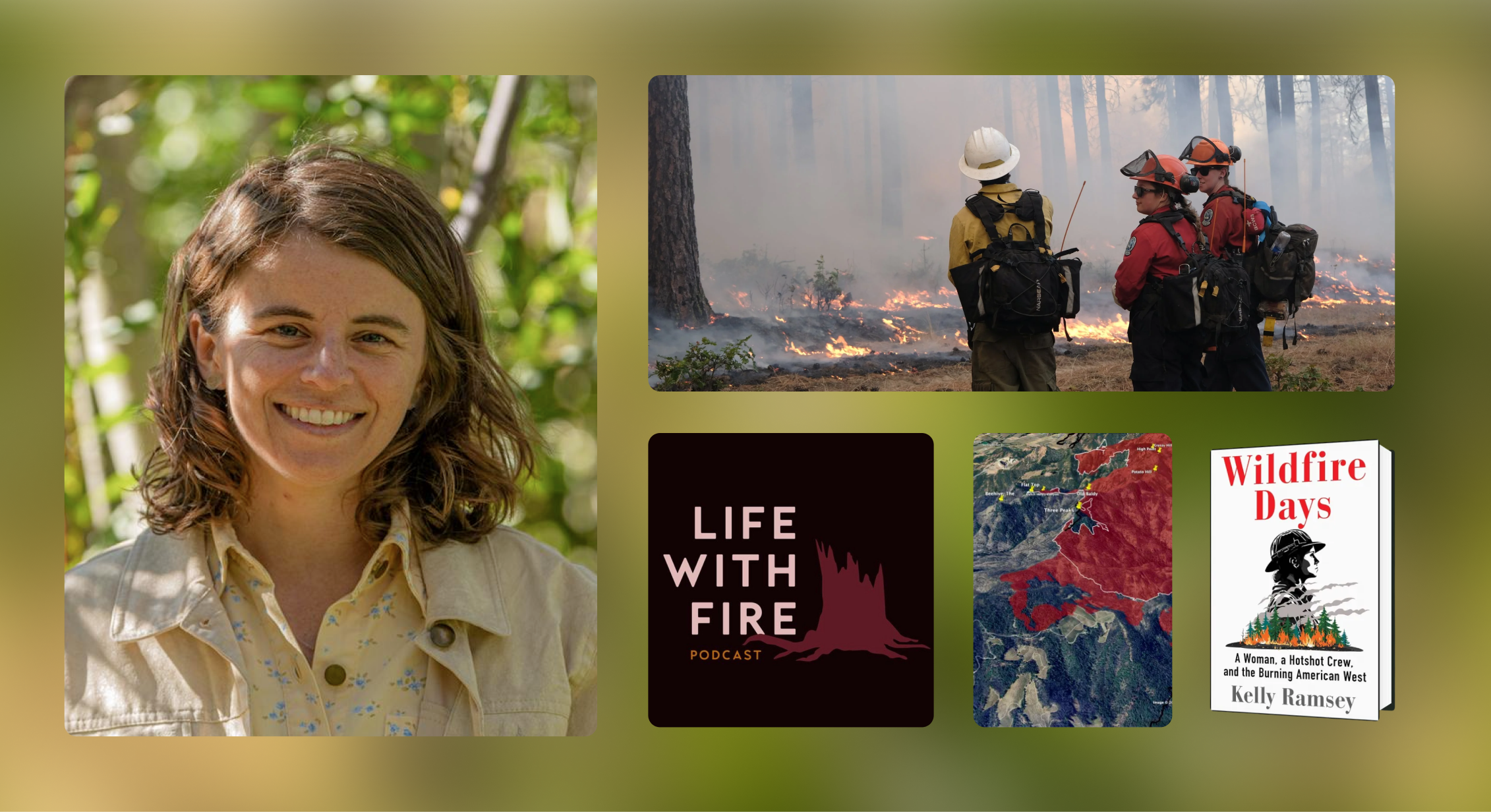
Amanda Monthei is a writer, podcaster, former hotshot and wildland firefighter for the U.S. Forest Service. Since her years working on the fireline, she’s written widely about wildfire and climate for publications incl. The Washington Post, The Atlantic, Outside, and Mountain Gazette. She produces and hosts the excellent Life with Fire podcast: a home for in-depth conversations with leaders in the field about wildfire resilience, prescribed burns, and more. These days, she’s living in Missoula, MT, getting her MFA in creative nonfiction.
Amanda and I met at the Banff festival. I was struck by her clear-eyed POV on individual agency in the face of climate crisis. Inspired by her great longform work on solutions like prescribed fire and beaver dam analogs, I invited her to share some stories and recommendations with the Index community. Check out our conversation below and explore her contributions here ~
Michael Bass: Before the podcast, the published pieces, and even your seasons on the fireline—I’m curious what first pulled you into working on fire. Was there a person, an experience, a book that helped set you on this path?
Amanda Monthei: I knew a few women in college (back in northern Michigan) who were fighting fire during their summer breaks to pay for school. I was pretty interested in what they were doing and then suddenly realized one day that I had agency and was also more than capable of trying it, too. I signed up for a few fire classes at the university where I got my undergrad degree in English and ended up getting my first fire job in northern Idaho the following summer. I read a few books about fire in the meantime (Fire on the Mountain and Young Men and Fire for two notable examples), which further amplified my interest not only in fire but in eventually wanting to write about it.
MB: Reading your words, there’s a beautiful balance of adventure storytelling, nature writing, direct advocacy, and a grounded voice that says: I’m a real human. AI could never. I know you’re working on some writing focused on growing up in Northern Michigan too. How would you trace the origins of your narrative voice?
AM: Something strange that has emerged in recent years is that my writing voice is quite a bit different depending on whether I’m writing memoir (usually in the form of essays about northern Michigan, fishing, skiing or some combination) or about fire/climate/ecology.
My memoir/essayist voice has a bit more levity and leans more heavily into humor and observation/reflection—on this side of things, I’ve been most inspired by the work of Jim Harrison (also a Michigander), David Sedaris, John Jeremiah Sullivan, Brian Doyle and Ernest Hemingway in his Nick Adams Stories. On the ecology/wildfire/climate (more broadly, the journalistic) side of things, I’ve been inspired largely by Rebecca Solnit, Joan Didion and the Macleans (both Norman and John).
My objective at the moment is to begin blending the levity, reflection and observation from my personal essays with some of the more hardlined reportage/research I’m doing in the wildfire/climate spaces. I think this intersection is where the magic happens, which is probably why I admire Solnit and Didion’s work so much.
MB: You’ve spent seasons as a hotshot in the west, so much we could talk about there. For someone looking to understand what it’s like on the fireline—the work of hotshots, smokejumpers, incident commanders—what’s a favorite story that feels true to the experience? (Your own work counts too.)
AM: I can’t recommend Kelly Ramsey’s book Wildfire Days enough, especially in terms of amplifying the day-to-day life of a woman on a hotshot crew. Kelly has this stunning ability to observe and contextualize her surroundings and experiences on a hotshot crew in a way that skirts the usual narratives that we generally read about in wildland firefighting—you know, the Big Tough Dude vs Big Scary Fire narrative. Her ability to bring vulnerability and a more feminine perspective to this experience resonated deeply with me, but I think anyone who is interested in fire and firefighting—regardless of gender—would dig this one.
Otherwise, I’d love to toot my own horn here and suggest my podcast, Life with Fire, which is really just me asking simple questions of extremely smart people who are doing incredible work in the wildfire space, whether through policy, research or in practice, on the ground.
I also recommend my friend Zeke Lunder’s work (checkout The Lookout)—he’s based in Northern California and much of his content centers on that area, but many of the key takeaways of the work he does in the wildfire space can be extrapolated to other areas and ecosystems. My favorite part of Zeke’s work is that he’s very no-bullshit in his delivery/approach, and has significant experience in the wildfire world. Like, if Zeke is mad, surprised or upset about something (the way a fire was managed, for example), you can trust it’s for very good reason.
MB: We’ve talked about your time living in Michigan, Washington, and Montana - are there local groups working to protect and steward the places most meaningful to you, that you’d recommend people check out?
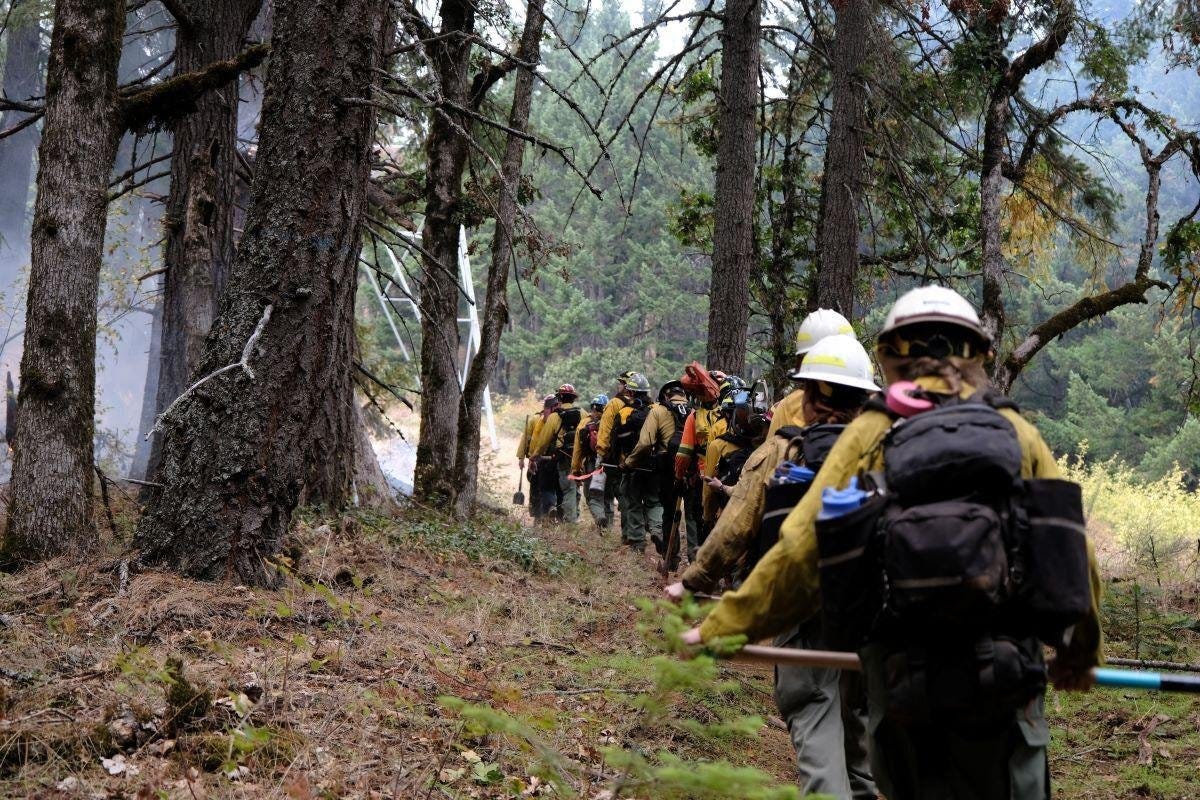
AM: I love what Mt. Adams Resource Stewards is up to in southcentral Washington and the Columbia River Gorge. They really embody values of community stewardship, collective action and using fire and land management as a means to finding shared values and solutions that work for everyone—all while meaningfully reducing wildfire risk, sharing essential skills and ecological knowledge with community members, and engaging more and more stakeholders in the process of sustainable and resilient land stewardship. Even if you’re not in the area, I’d recommend just looking into all the things they’re doing to improve ecological literacy and skills-based learning in their area, which has included starting a Prescribed Burn Association and running an annual Prescribed Fire Training Exchange!
MB: These days you’re in Missoula, a perfect spot for many outdoor hobbies of yours, like fishing and skiing. Not so much surfing? Any can’t-miss spots that more people should know about?
AM: I’m hoping to get out and start doing some recons this winter particularly into the Bitterroot Mountains (for skiing), to Lolo Pass (for skiing and hot springs), and along all the different intersecting rivers in this area for some winter flyfishing. There’s a manmade wave on the Clark Fork River in downtown Missoula that I look forward to being humbled on this spring. I’m sort of a Beginner+ surfer, which means river waves are probably beyond my pay grade but I’m no less curious. Also very excited to explore more offerings at the local community arts center (shout out to the ZACC!), where I learned how to do printmaking this fall, which has proven to be a lovely creative-but-not-writing-based hobby for the winter months!
Follow Amanda’s work on her website, Substack or Instagram.
You can see all the recommendations from our contributors by exploring the Index platform as an early bird ~